They say it’s good to know what you like/want. Well, I know I like these patterns below. It was only after I bought some curtains, pillows and dessert plates did I realize they all showcased different designs of damask. The reason why I like it so much is the feel that a soft combination of modern and Old Glam accents bring into a room. Especially the whites and blacks, the turquoise, the golds, the reds and grays.
Damask (Arabic word) is a reversible figured fabric of silk, wool, linen, cotton, or synthetic fibers, with a pattern formed by weaving. Damasks used one of the five basic weaving techniques of the Byzantine and Islamic weaving centers of the early Middle Ages and derive their name from the city of Damascus, which at the time was a large city active in both trading and manufacture. Damasks were scarce after the ninth century outside of Islamic Spain, but were revived in some places in the thirteenth century. The word “damask” is first seen in a Western European language in the mid-14th century in French. By the fourteenth century, damasks were being woven on draw looms in Italy. From the fourteenth to the sixteenth century, most damasks were woven in a single color, with a glossy warp-faced satin pattern against a duller ground. Two-color damasks had contrasting color warps and wefts, and polychrome damasks added gold and other metallic threads or additional colors as supplemental brocading wefts. Medieval damasks were usually woven in silk, but wool and linen damasks were also woven.
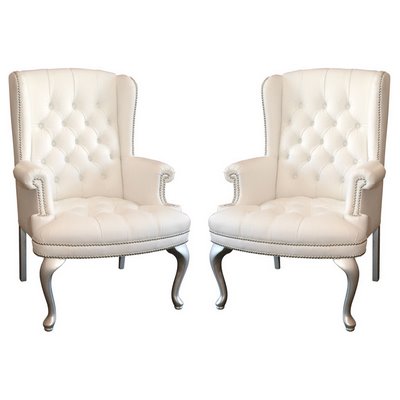
Mixed in with damask, I love Chesterfield tufted furniture (preferably fabric instead of leather pieces) and elegant white wingback chairs. What do you think? For more, read my full article here.